Severe Accident
Severe Accident
중대사고 종합해석코드와 CFD를 이용한 원전 중대사고 해석
Since the Fukushima Daiichi accident in 2011, understanding severe accidents has become essential for nuclear safety. ATHENA develops plant models of operating reactors (OPR1000, APR1400) and new designs (i-SMR, MSR), and analyzes severe accident progression, containment phenomena and source terms with integrated codes including MELCOR, MAAP and CINEMA. The ultimate goal is to derive the most effective accident management strategies for mitigating accident progression.
Integrated severe accident analysis of LWRs and SMRs
OPR1000·i-SMR 입력모델 개발과 MELCOR·CINEMA 기반 사고 진행 해석
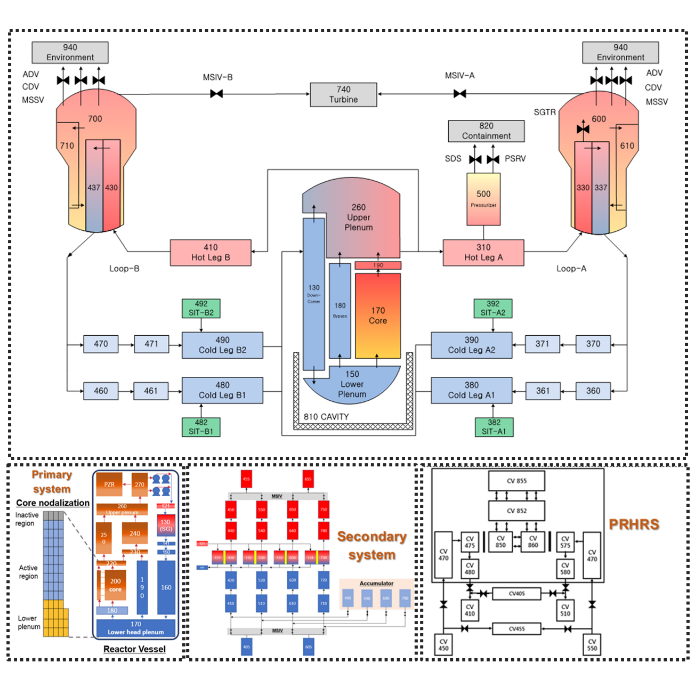
We develop plant input models for large PWRs and the i-SMR and simulate severe accident sequences from core degradation to containment response. For the i-SMR, we evaluate the mitigation performance of the flooding safety system, analyze total loss of feedwater scenarios, and compare the severe accident phenomena predicted by MELCOR and the Korean code CINEMA, including the development of MELCOR standard input for independent regulatory verification.
CINEMA uncertainty analysis and source term
국산 중대사고 해석코드 CINEMA의 불확실도 분석과 방사선원항 평가
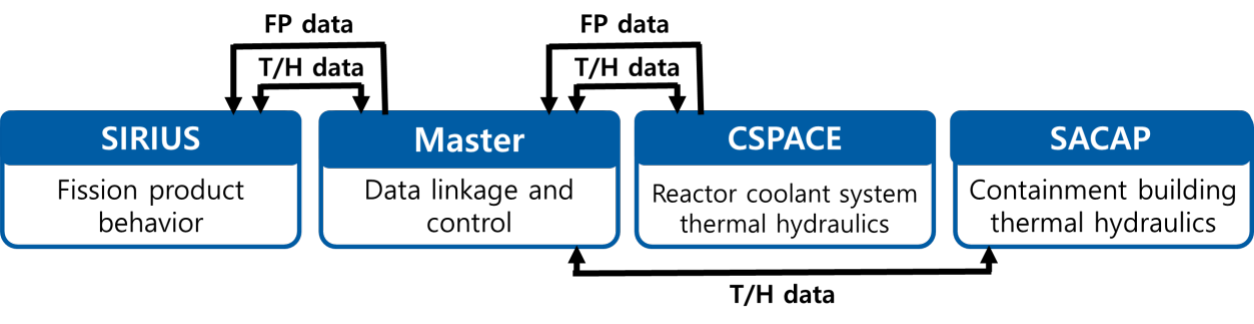
CINEMA is the integrated severe accident code developed in Korea, linking modules for reactor coolant system thermal-hydraulics (CSPACE), containment (SACAP) and fission product behavior (SIRIUS). We contribute to its improvement through uncertainty and sensitivity analyses of LOCA scenarios in OPR1000, time-step and nodalization studies, and assessments of how thermal-hydraulic coupling affects fission product release and transport.
Containment phenomena: hydrogen, MCCI and fission product scrubbing
수소 연소, 노심용융물-콘크리트 반응(MCCI), 풀 스크러빙 등 격납건물 현상 해석
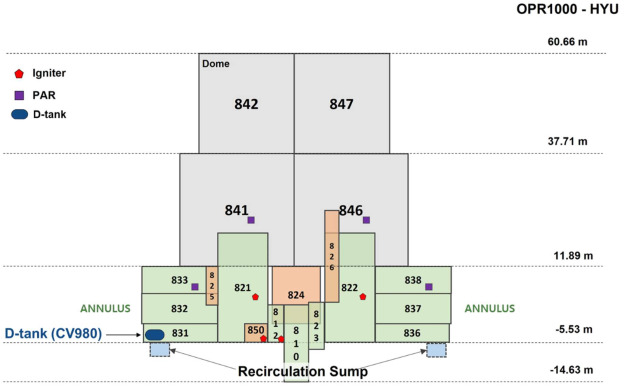
The integrity of the containment determines how much radioactive material is released. We analyze hydrogen generation, in-core ignition and flame propagation into the containment, molten core-concrete interaction and corium coolability under top flooding, and the performance of an improved pool scrubbing system for thermally induced steam generator tube rupture.
Severe accidents of molten salt reactors
누설 용융염의 퍼짐·고화, 용융염 풀 냉각성, 핵분열생성물 방출 해석
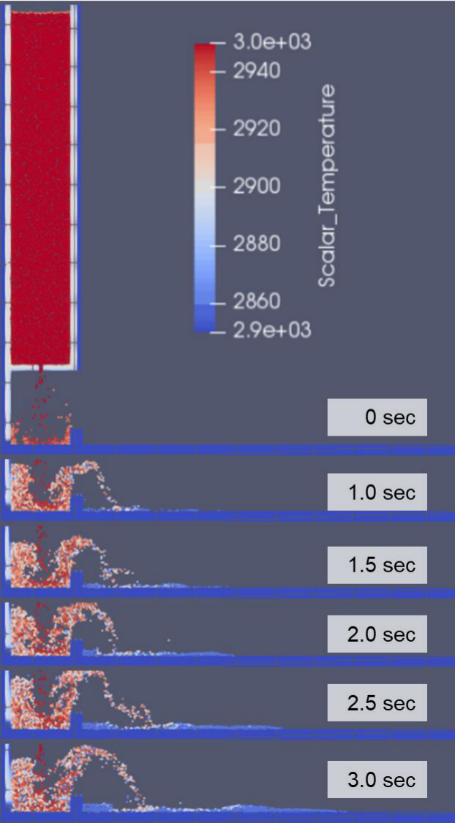
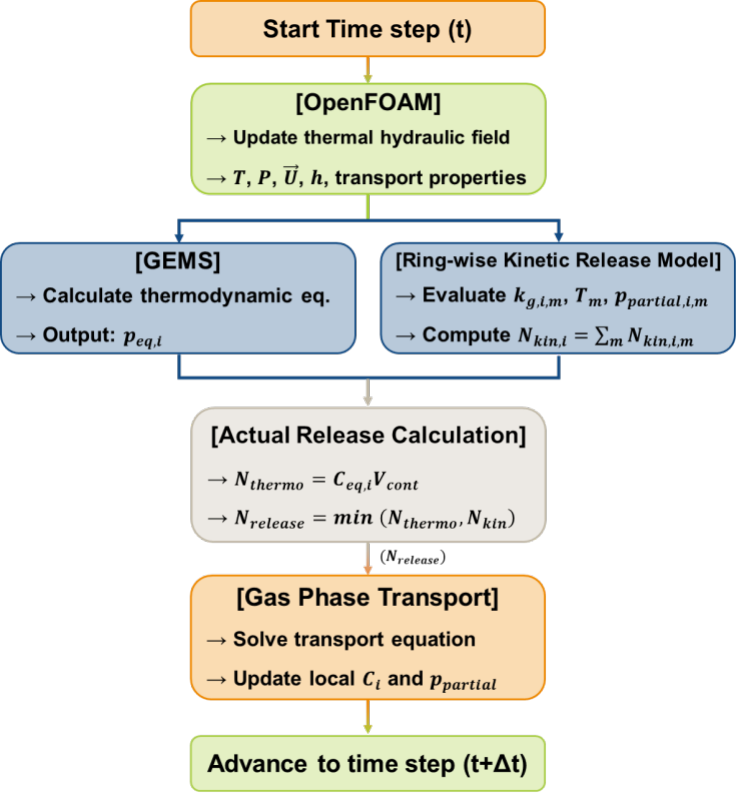
In an MSR accident, leaked fuel salt spreads and solidifies on the containment floor while generating decay heat, and radionuclides are released depending on the salt chemistry. We simulate salt spill, spreading and solidification with ANSYS Fluent, OpenFOAM and the moving particle semi-implicit (MPS) method, evaluate the coolability of molten salt pools for core catcher design, and couple OpenFOAM with the thermochemistry code GEMS to predict fission product release.